Maximize Crop Yields with Advanced Agricultural Drones
Overview
This article explores the transformative role of agricultural drones in modern farming, highlighting their capabilities in crop monitoring, spraying, and resource management. Readers will learn about advanced models such as the DJI Agras T100 and ABZ Innovation L10 Pro, along with their unique features and benefits. By understanding these technologies, farmers can enhance productivity and sustainability in their agricultural practices.
Table of Contents
In the ever-evolving landscape of agriculture, technology plays a pivotal role in enhancing productivity and efficiency. Among the most innovative tools available today are agricultural drones, which have revolutionized the way farmers monitor and manage their crops. In this article, we will delve into some of the most advanced agricultural drones available, focusing on their capabilities, which include precise spraying, spreading, and obstacle detection systems. We will look at the DJI Agras T100 Agriculture Spraying Drone - Ready to Fly Kit, the ABZ Innovation L10 Pro Spraying Drone, the DJI Agras T100 Intelligent Agriculture Drone - Airframe Only, and the DJI Agras T40 Spreading System 3.0. These drones not only streamline farming operations but also improve crop health monitoring and resource management.
DJI Agras T100 Agriculture Spraying Drone
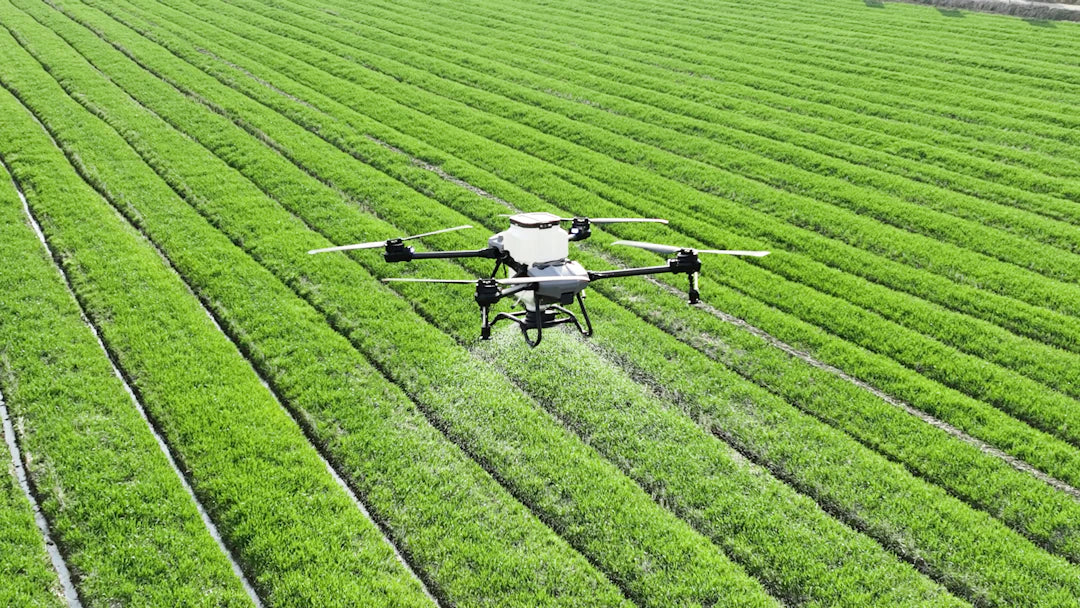
The DJI Agras T100 Agriculture Spraying Drone - Ready to Fly Kit is a groundbreaking piece of equipment designed to handle large-scale agricultural tasks efficiently. With a maximum payload of 100 kg, this drone is capable of carrying significant amounts of liquid fertilizers and pesticides, making it ideal for extensive farming operations.

Equipped with a 100-liter spraying tank and a flow rate of 40 L/min, the T100 ensures that large fields can be covered quickly and effectively. The dual atomizing centrifugal sprinklers enhance spray coverage, allowing farmers to achieve optimal results. Furthermore, the drone features advanced technological integrations like a LiDAR system, which enhances operational safety by detecting obstacles and adjusting its flight path in real-time. This is especially important in rugged terrains, making the T100 a versatile tool for any farmer.
ABZ Innovation L10 Pro Spraying Drone
Next on our list is the ABZ Innovation L10 Pro Spraying Drone, which stands out for its advanced LiDAR-based sensing system. This innovative technology allows the drone to navigate complex environments with precision, detecting obstacles like thin power lines and other potential hazards. The LiDAR system creates a detailed 3D map of the surroundings, enabling the drone to operate efficiently without requiring pre-mapping.

The L10 Pro’s ability to control altitude precisely in rugged terrains and avoid collisions makes it an ideal choice for farmers who require high accuracy in their operations. With this drone, users can expect enhanced safety and reduced operational risks, leading to more efficient agricultural practices. It's an investment that can significantly enhance crop management and overall farm productivity.
DJI Agras T100 Intelligent Agriculture Drone - Airframe Only
For those who prefer a customizable approach, the DJI Agras T100 Intelligent Agriculture Drone - Airframe Only offers a robust airframe that can be tailored to specific agricultural needs. This version of the T100 provides the same exceptional payload capacity and operational features, allowing users to equip it with their choice of spraying or spreading systems based on their unique agricultural scenarios.

This flexibility allows farmers to adapt to changing needs throughout the growing season, whether that involves applying fertilizers or pesticides or even adjusting the drone’s attachments for different crops. The T100’s design ensures that farmers can achieve high efficiency and effectiveness, leading to improved crop yields.
DJI Agras T40 Spreading System 3.0
Completing our review is the DJI Agras T40 Spreading System 3.0. This system is a perfect complement to the aforementioned drones, providing enhanced spreading efficiency and superior performance for agricultural applications. The T40 system is designed to increase the speed and accuracy of spreading operations, optimizing the distribution of seeds, fertilizers, and other materials across large fields.

The advanced features of the T40 enable it to distribute materials evenly and efficiently, reducing waste and ensuring that plants receive the nutrients they need. By integrating this system with drones like the T100, farmers can create a comprehensive solution for managing their agricultural tasks, maximizing productivity while minimizing environmental impact.
Why Invest in Agricultural Drones?
Investing in agricultural drones is not just about keeping up with the latest technology; it’s about improving the overall efficiency and sustainability of farming practices. Here are some key benefits of using agricultural drones:
- Increased Efficiency: Drones can cover large areas in a short amount of time, allowing farmers to manage more land effectively.
- Improved Crop Monitoring: With capabilities like thermal imaging and LiDAR, drones can provide detailed insights into crop health and moisture levels.
- Cost-Effective Solutions: By automating tasks like spraying and spreading, drones help reduce labor costs and resource waste.
- Data-Driven Decisions: Drones can collect data that aids in making informed decisions about crop management and resource allocation.
Buyer’s Guide: Choosing the Right Drone for Your Needs
When selecting an agricultural drone, consider the following factors to ensure you choose the best option for your farming operations:
- Payload Capacity: Assess how much weight you need the drone to carry and choose a model that meets this requirement.
- Spraying and Spreading Features: Look for drones that have customizable options for different agricultural applications.
- Obstacle Detection: Drones with advanced sensing systems can help prevent accidents and improve operational safety.
- Battery Life and Range: Ensure that the drone can cover the necessary distance without frequent recharging.
- Ease of Use: Consider user-friendly interfaces and support systems to streamline drone operation.
In conclusion, agricultural drones like the DJI Agras T100, ABZ Innovation L10 Pro, and DJI Agras T40 Spreading System represent the forefront of technology in farming. By leveraging these tools, farmers can enhance their operations, improve crop health, and achieve greater sustainability in their practices. Whether you are looking for advanced spraying solutions or comprehensive spreading systems, these drones offer the features necessary to take modern agriculture to the next level.
Key Takeaways
- Advanced Technology: Agricultural drones utilize cutting-edge features like LiDAR and thermal imaging for enhanced crop monitoring and operational safety.
- High Payload Capacity: Models like the DJI Agras T100 can carry up to 100 kg, making them suitable for large-scale agricultural tasks.
- Customization: The DJI Agras T100 Intelligent Agriculture Drone - Airframe Only allows farmers to tailor their drones to specific needs, adapting to various agricultural scenarios.
- Efficiency Improvements: Drones can cover large areas quickly, significantly increasing farming efficiency and reducing labor costs.
- Obstacle Detection: Advanced sensing systems in drones like the ABZ Innovation L10 Pro help navigate complex environments and avoid hazards.
- Cost-Effective Solutions: Automating tasks such as spraying and spreading leads to reduced resource waste and more informed decision-making.
- Enhanced Spreading Systems: The DJI Agras T40 Spreading System 3.0 optimizes material distribution, ensuring even coverage and minimizing environmental impact.
Pros and Cons
| Advantages of Agricultural Drones | Drawbacks of Agricultural Drones |
|---|---|
| Increased efficiency in covering large areas quickly. | High initial investment costs for advanced models. |
| Improved crop monitoring with advanced imaging technologies. | Requires training for effective operation and maintenance. |
| Cost-effective solutions by reducing labor and resource waste. | Potential regulatory restrictions on drone usage. |
| Data-driven decision-making through precise data collection. | Battery life limitations may affect operational range. |
| Customizable features to adapt to various agricultural needs. | Dependence on technology may pose risks in case of failures. |
Who It's For (And Not For)
Who It's For
- Large-Scale Farmers: Those managing extensive fields will benefit from the high payload capacity and efficiency of drones like the DJI Agras T100.
- Tech-Savvy Farmers: Individuals comfortable with advanced technology and data analysis will find the features of agricultural drones particularly advantageous.
- Farmers in Rugged Terrains: The LiDAR-based systems in drones such as the ABZ Innovation L10 Pro make them ideal for navigating complex environments safely.
- Farmers Seeking Customization: Those who need adaptability in their farming operations will appreciate the customizable airframe of the DJI Agras T100.
Who It's Not For
- Small-Scale Farmers: Individuals with limited land may not find the investment in agricultural drones necessary or cost-effective.
- Farmers Unfamiliar with Technology: Those who are not comfortable using advanced technology may struggle to operate these drones effectively.
- Budget-Conscious Farmers: The initial investment and maintenance costs of drones may be prohibitive for farmers on a tight budget.
- Farmers with Minimal Labor Needs: If a farming operation does not require extensive spraying or monitoring, the benefits of drones may not justify the expense.
Comparison at a Glance
| Option | Best for | Strengths | Trade-offs |
|---|---|---|---|
| DJI Agras T100 Agriculture Spraying Drone - Ready to Fly Kit | Large-scale farming operations | High payload capacity, advanced obstacle detection, quick coverage | Higher initial investment, may require training for optimal use |
| ABZ Innovation L10 Pro Spraying Drone | Precision navigation in complex environments | Advanced LiDAR sensing, high accuracy, reduced operational risks | Limited payload compared to others, potential software learning curve |
| DJI Agras T100 Intelligent Agriculture Drone - Airframe Only | Customized agricultural needs | Flexible design, high efficiency, adaptable to various attachments | Requires additional investment for attachments, assembly needed |
| DJI Agras T40 Spreading System 3.0 | Enhanced spreading efficiency | Optimized material distribution, reduces waste, integrates well with other drones | Dependent on compatible drones, may not be standalone |
Frequently Asked Questions
1. What are agricultural drones used for?
2. What is the payload capacity of the DJI Agras T100 Agriculture Spraying Drone?
3. How does the ABZ Innovation L10 Pro Spraying Drone navigate complex environments?
4. What features does the DJI Agras T40 Spreading System 3.0 offer?
5. What factors should I consider when choosing an agricultural drone?
Glossary
| Term | Meaning |
|---|---|
| Agricultural Drones | Unmanned aerial vehicles used for farming tasks. |
| Payload Capacity | The maximum weight a drone can carry. |
| LiDAR | Light Detection and Ranging technology for mapping and obstacle detection. |
| Spraying Tank | A container on a drone for holding liquid fertilizers or pesticides. |
| Obstacle Detection | Technology that helps drones avoid collisions. |
| Thermal Imaging | Technology that detects heat to assess crop health. |
| Customizable | Ability to modify a drone’s features for specific tasks. |
| Spreading System | A mechanism for evenly distributing seeds or fertilizers. |
| Operational Efficiency | The effectiveness of a drone in performing farming tasks. |
| Data-Driven Decisions | Making informed choices based on data collected by drones. |